Mosquito Control in Rutland, MA: Breeding Sites, Treatment Timing and a Season Long Program

Mosquito control in Rutland, MA, works when it is built around your property rather than around the calendar alone. Our crews walk the same wet corners every season: the low spot behind the shed that holds water for a week after a storm, the corrugated downspout extension packed with leaf litter, the birdbath nobody empties in July.
Rutland Turfcare & Pest Control has been a family owned company for more than 60 years, and our technicians hold Massachusetts licenses covering turf, tree and insect care. That matters here because mosquito pressure on a wooded central Massachusetts lot is a habitat problem first and a spray problem second.
This guide covers what actually drives mosquito numbers on a residential lot, how barrier applications and larvicide do two different jobs, when treatments should begin and end in a New England season, and what a realistic program schedule looks like. It also covers the part homeowners find most frustrating: mosquitoes arriving over the property line by the hundred.
Set the expectation correctly and a treated yard becomes usable again on an August evening.
Related: Take Back Your Backyard: How Mosquito Control Transforms Outdoor Living in Rutland, MA
Where Do Mosquitoes Actually Breed on a Rutland Property?
Typically within about 150 feet of where you are being bitten, in water that has stood still for five days or longer. The species that torment backyards in central Massachusetts are container breeders and floodwater breeders, not long distance travelers. That is why a property walk finds more than a fogging schedule does.
On a typical Rutland lot our technicians find larvae in clogged gutters, in the saucers under potted annuals, inside corrugated drain pipe, in tarps over firewood, in wheelbarrows left upright, in the folds of a pool cover and in the rim of an unused tire swing. A single blocked gutter run produces thousands of adults across a summer.
Natural sites matter too. Tree holes on mature maples and oaks hold water for weeks, wetland edges and vernal pools refill after every heavy rain, and low ground along the Ware River watershed stays saturated well into June. Those sites are treated differently from a rain barrel, which is why identification comes before any product decision.
The Five Day Rule Worth Remembering
A mosquito egg reaches biting adult in roughly seven to ten days at midsummer temperatures, and the aquatic stages occupy most of that window. Emptying, tipping or flushing any container once a week interrupts the cycle before it finishes. Homeowners who do that one chore see a measurable drop in pressure before a technician arrives.
The same rule explains why fogging on its own disappoints. A fog kills the adults flying at that moment and leaves every larva in the property untouched, so a fresh brood emerges within the week. Treating the resting foliage and the water together is what changes the trajectory of a season.
How Long Does a Mosquito Control Treatment Last?
A professional barrier application typically holds for three to four weeks in New England summer conditions. Heavy rain, aggressive irrigation and hard pruning all shorten it, because the residue sits on the leaf surfaces that get washed or removed.
Our PestPRO Yard Defense program is built on that interval: six applications spaced every four to six weeks across the season. The organic version, which uses a natural cedar oil formulation, breaks down faster and runs on ten applications every two to three weeks instead.
If pressure climbs between visits, the barrier has usually been compromised by weather or by a new breeding site. We return and re treat at no charge in that situation, which is the practical reason free service calls are part of every program we sell.
When Should Mosquito Treatments Start in a New England Season?
Earlier than most homeowners expect. Overwintering females emerge once daytime temperatures hold above the low fifties, which in central Massachusetts generally lands in the second half of April. Treating that first generation before it lays reduces every generation that follows.
A first visit in late April or early May, with the last application in September or early October, covers the biting season properly. Stopping at Labor Day is a common mistake: September evenings in Rutland stay mild, and late season mosquitoes carry the highest virus risk of the year.
The Massachusetts Department of Public Health tracks West Nile virus and eastern equine encephalitis through the summer and publishes town level risk ratings. Those ratings usually peak in August and September, precisely when many homeowners have already canceled service.
What Is the Difference Between a Barrier Treatment and a Larvicide?
A barrier treatment targets adult mosquitoes where they rest. A larvicide targets the immature stages in standing water. They solve different halves of the same problem, and a program using only one of them underperforms.
Barrier work goes on the undersides of leaves in shrub borders, on fence lines, under decks, along tree lines and in ground cover. Adult mosquitoes spend daylight hours in that cool humid foliage and pick up the residue when they land. Open lawn gets very little product because mosquitoes do not rest there.
Larvicide goes into water that cannot practically be drained: a low swale, a catch basin, an ornamental pond edge, a rain barrel that has to stay full. Bacterial larvicides act on mosquito larvae and leave fish, frogs and pollinators alone.
Source reduction sits alongside both. Emptying, tipping, screening and regrading remove the habitat outright, and it is the only part of the work that lasts beyond a single application interval.
How Often Should Mosquito Control Be Applied Through the Summer?
Every four to six weeks for a conventional barrier program, every two to three weeks for an organic one. Those intervals are set by how long the material stays active on foliage, not by how bad the biting feels in a given week.
Skipping a round costs more than the visit. Mosquito populations rebuild exponentially, so a four week gap in July hands you a population several times larger by the time the next technician arrives. Consistency through the middle of the season does more for comfort than any single heavy application.
Properties near standing water often run on the shorter end of the interval. We adjust the schedule after the first two visits based on what the site is actually producing, and we log the wet spots so the next technician treats them without being told.
Is Mosquito Control Safe Around Children, Pets and Pollinators?
Mosquito control is safe around children, pets and pollinators with correct application and a short reentry window. Materials are applied to foliage and structure rather than to play surfaces, and the treated areas are dry within roughly 30 minutes. Our technicians ask you to keep children and dogs off the treated foliage until then.
Pollinator protection drives timing. We treat early in the morning or toward evening while bees are least active, we do not apply to flowering plants in bloom, and we route the application around vegetable gardens on request. The cedar oil option exists for households that want a botanical material with no effect on bees at all.
Every product we use is applied by a Massachusetts licensed technician following label rate and site restrictions. If you have specific concerns about a pond, a beehive or an edible bed, tell us at the walkthrough and the plan gets written around it.
Related: Comprehensive Pest Control and Mosquito Control in Sudbury, MA and Concord, MA
Why Do Mosquitoes Keep Coming Back From Neighboring Land?
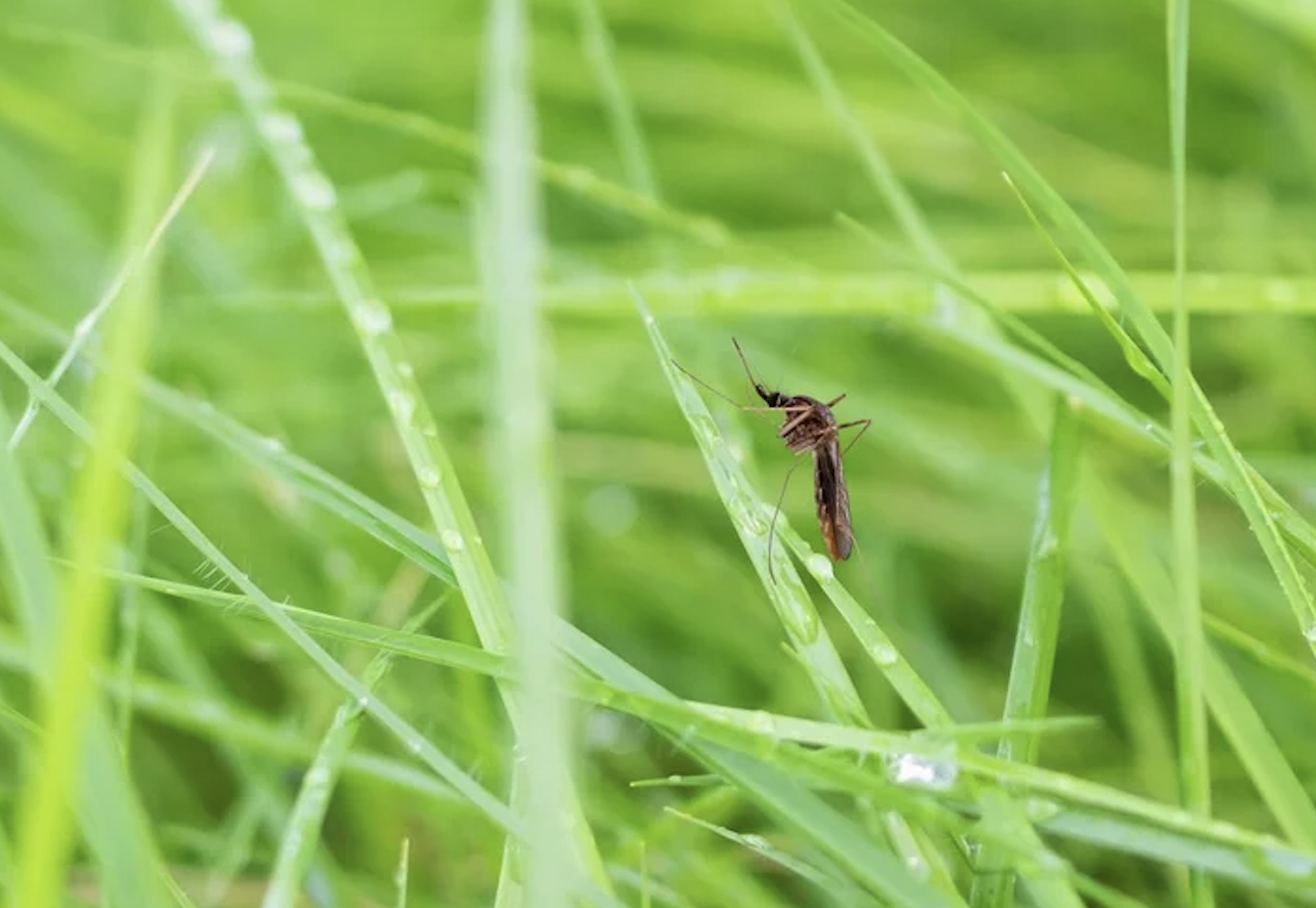
Because a treated property is an island. Most backyard species travel a few hundred feet in their lifetime, so an untreated wetland, an abandoned pool or a neglected woodpile next door keeps feeding your yard regardless of how well your own barrier is holding.
That reality shapes what a program should promise. A well run barrier reduces biting pressure sharply and reliably, and it does not produce a sterile yard. Anyone promising zero mosquitoes on a wooded Rutland lot beside a wetland is selling something we would not.
What Works Along a Shared Boundary
We treat the property line foliage heavily, because that is where incoming adults land first. Where a neighbor is willing, treating both sides of the line together produces a far better result for both households, and we quote adjoining properties on the same visit to make that easy.
Beyond the line, the practical levers are yours: thin dense understory to move air, keep grass and ground cover cut on the shaded side, and raise the canopy on low branching trees so the resting habitat dries out during the day.
What a Season Long Mosquito Program Looks Like
The first visit is a walk, not a spray. A technician maps the resting habitat, finds and records the water sources, checks gutters and downspout extensions, notes the beehive and the vegetable bed, and then treats. That map drives every visit afterward.
Visits two through five follow the interval, adjusting for rainfall and for what the previous technician logged. Each visit combines a barrier application on resting foliage with larvicide in whatever standing water remains, plus a quick recheck of the containers that were a problem last time.
The final visit in September or early October carries the property through the late season risk window and closes out the year with notes for spring. Households on our year round programs usually pair the yard work with interior and foundation coverage so the autumn migration indoors is handled at the same time.
Pricing follows treated area and site complexity rather than square footage alone, because a half acre with 300 feet of wet wooded edge takes longer than an acre of open lawn.
Rutland Conditions That Drive Mosquito Pressure
Rutland sits high in the Ware River watershed, with wooded lots, seasonal streams and wetland margins running through much of the town. Vernal pools fill in March and hold into early summer, producing a heavy first flush of floodwater mosquitoes before the container species take over in July.
Mature tree canopy is the other local factor. Shade keeps understory foliage cool and damp through the afternoon, which is ideal resting habitat, and it slows evaporation in every low spot on the property. Properties in Princeton, Holden and the surrounding hill towns behave the same way.
Late summer thunderstorms reset the cycle. A two inch rain refills every depression on a wooded lot and starts a fresh generation, which is why post storm timing matters more here than a fixed date on a calendar.
We service Rutland alongside more than 25 other Massachusetts towns, and the treatment plan shifts with the terrain in each one.
Why Work With a Licensed Local Team Rather Than a Franchise Route
Mosquito work rewards site knowledge. A technician who treated your property in June knows where the water sat in May, which is information a rotating route driver does not carry. We assign technicians to properties for that reason.
Our team has worked central Massachusetts landscapes for six decades, and the same company handles the lawn and the ornamental beds. That matters because irrigation settings, mulch depth and pruning schedules all change how long a barrier holds, and those decisions sit with people who talk to each other.
It also means the mosquito program fits inside a wider plan. Households that already run a lawn or ornamental program with us add yard coverage without a second vendor, a second invoice or a second set of gate codes.
Get Your Yard Back This Season
If you have stopped using the deck after six in the evening, start with a property walk. Our technicians will map the breeding sites, show you the two or three fixes worth making yourself, and build a mosquito control schedule around the water your lot actually holds.
We treat yards, lawns, ornamental beds and homes across Rutland, MA, and the surrounding towns, and we monitor tick pressure on the same visit. Contact Rutland Turfcare & Pest Control and let us put the evenings back in your hands.
In Summary: Mosquito Control in Rutland, MA
Where are mosquitoes breeding on my property?
Generally in standing water within 150 feet of where you are bitten: gutters, drain pipe, plant saucers, tarps, tree holes and low ground that stays wet for five days or more.
How long does one treatment last?
Three to four weeks for a conventional barrier application, two to three weeks for the cedar oil organic option, shorter after heavy rain.
When should the season start and finish?
Late April or early May through September or early October, because late season carries the highest virus risk in Massachusetts.
Will it stop every mosquito?
A good program sharply reduces biting pressure and keeps reducing it as source reduction takes hold, though it will not stop every mosquito, since pressure from untreated land next door continues.
Related: Effective Mosquito Control Solutions in Northborough and Lexington, MA
About the Author
As a local, family-owned company that’s been in business for over 60 years, we have unrivaled experience and a respected reputation within the lawn care industry. We stand by our quality of work, friendly service, and level of communication.
