The last visit of a Massachusetts lawn season carries a number. Step six is the winterizer, and once it goes down the year is closed and the ground asks for nothing further until spring. That gap is where the useful thinking about lawn care services in Rutland, MA happens, because the decision waiting for a homeowner right now is not simply who to call in April. It is which version of the work they want done to their grass.
Rutland Turf Care is a local, family-owned company that has been in business for over 60 years, and our team has watched that autumn question repeat across MetroWest and the greater Worcester area. Most homeowners arrive at it from one of two directions.
Some bought a handful of single treatments this year and want to know what a managed season would have produced; others ran a full program and are weighing a different chemistry for the household. Those are the same questions asked from opposite ends.
This guide walks the decision in the order it presents itself: single treatments against a managed six-visit season, then Traditional against Hybrid against Eco-Friendly, then the case for putting the pest side of the property under the same provider as the grass.
Related: How Our Lawn Care Company Builds a Seasonal Program for Rutland, MA, Lawns
What Does the Lawn Winterizer Visit Close Out?
The winterizer closes out the current season and is the only visit that works on next year rather than this one. It is step six on every one of our lawn programs. The fertilizer going down in late autumn feeds root systems while the soil is still warm and the top growth has stopped, which is where a lawn stores what it will spend in April, and a property treated in November tends to green up earlier and with less correction than one abandoned after Labor Day.
Autumn is also an honest time to judge a provider. The season is finished, the results are visible, and nothing is hidden under a flush of new growth. Thin patches, weed pressure that came back in August, and areas that burned out in July are all still legible in October.
The practical consequence is scheduling. Our visit calendar for the following season is built over the winter, and the first applications in a Massachusetts spring land in a narrow window set by soil temperature rather than by the date on a contract. Signing in autumn puts a property into the early part of that route rather than the back of it.
When Is a Single Lawn Treatment the Right Call?
A single lawn treatment is the right call when the lawn is basically sound and needs one specific correction. Aeration on a compacted lawn, a fungicide treatment on a disease outbreak, or insect control on an otherwise healthy stand of grass all make sense as standalone work, and our additional services are listed separately from the full-season programs because the two answer different situations.
What a single treatment cannot do is hold a result. Turf responds to a sequence, and the value of a pre-emergent in April depends entirely on what follows it in June and August. One application on a struggling lawn buys a few good weeks and then returns the property to the conditions that caused the problem.
Our programs are built as a season-long plan rather than a single visit, which is a statement about who the product suits rather than a sales line. A homeowner who prefers to call when something looks wrong will get more out of individual treatments than out of a season.
The division is reasonably clean. If the lawn is in decent shape and the goal is one correction, buy the correction. If the goal is a lawn that looks in August the way it looked in May, that is a season rather than a visit.
What Separates the Traditional, Hybrid and Eco-Friendly Lawn Care Programs?
The products applied at each visit separate the three TurfPRO programs, not the schedule. All three run six visits across the season and all three finish at the winterizer, so the difference lies in what goes down at each stop and what does not.
The three are worth reading side by side rather than one at a time, because the differences are easier to see as a comparison than as three separate descriptions. The summaries below follow the same six-visit frame for that reason.
Traditional Lawn Care Program
Traditional pairs six slow-release fertilizations with conventional controls. Pre-emergent crabgrass control lands at the first two visits, a blanket broadleaf treatment comes in at the second, spot treating and preventive grub control carry the middle of the season, and a blanket weed treatment and lime come in at the fifth.
It is the quickest route to a uniformly clean stand and the tier most homeowners picture when they think about professional turf care.
Hybrid Lawn Care Program
Hybrid keeps the same six visits and changes the inputs.
Fertilization is organic throughout, biostimulants come in at several steps, and the weed and crabgrass controls are restricted to EPA-registered low-risk products with no adverse effect on bees or other pollinators. It suits a household that wants conventional results from a shorter chemistry list.
Eco-Friendly Lawn Care Program
Eco-Friendly drops conventional controls altogether. Six organic fertilizations, biostimulants and soil inoculants run across the same six visits, and the program is built to be safe for pollinators.
It asks more patience of the homeowner, because soil-driven improvement arrives over seasons rather than weeks, and it is the tier that suits properties with dogs, young children or a pollinator planting the household cares about.
Related: The Complete Guide to Lawn Fertilization in Rutland, MA, for a Thicker, Greener Lawn
How Do Six Lawn Care Visits Fit a Massachusetts Growing Season?
Six lawn care visits sit roughly five to six weeks apart on the Traditional program, which stretches the sequence from the first workable ground in spring to the last mowing of late autumn. The spacing is not arbitrary. Each application is timed against soil temperature and the growth stage of both the grass and whatever is competing with it.
The front of the season is prevention. Crabgrass is stopped before it germinates or it is not stopped at all, which puts a hard deadline on the first two visits that no amount of later work recovers. A spring that warms early compresses that window further, which is the practical argument for being on a route that is already built rather than one being assembled in March.
The middle of the season is pressure and recovery. Broadleaf weeds get blanket or spot treatment depending on what the property is showing, white grubs are addressed preventively during the window when the beetles lay, and feeding continues through the heat so the lawn carries its color into August.
The back of the season is repair and storage. Autumn is when cool-season grass does most of its real growing, so the final two visits do more for next year’s appearance than anything applied in June. Once you sign up, the timing is handled for you, and we return throughout the season rather than waiting for you to call between visits.
Which Lawn Care Program Tier Suits Your Household?
The right tier starts with the people and animals using the lawn rather than with the lawn itself. A household with a dog that lies on the grass all afternoon, or with small children on it daily, usually lands on Hybrid or Eco-Friendly whatever the turf technically needs. That is a legitimate way to decide, and we would rather a homeowner choose on that basis openly than quietly worry about the tier they signed.
Then look at what the property is fighting. A lawn carrying established crabgrass or a persistent broadleaf problem gets on top of it faster under Traditional, and some homeowners run Traditional for one season to reset the stand before moving to Hybrid to hold it. The six-visit structure is identical across the tiers, so changing between years changes the products rather than the rhythm of the service.
Then look at patience. Eco-Friendly improves a lawn by improving its soil, which is durable and slow. Judged at the end of a single season it reads as less value than it is, and judged at the end of three it frequently reads as more.
Site conditions decide the remainder. Heavy shade, compaction from foot traffic, thin soil over ledge and drought stress all cap what any chemistry achieves, and those are worth naming at the walkthrough rather than discovering in July. A tier is a choice about products, not a substitute for a lawn that wants aeration or an irrigation head that has been pointing at the driveway since June.
Should Pest Control Sit With Your Lawn Care Provider?
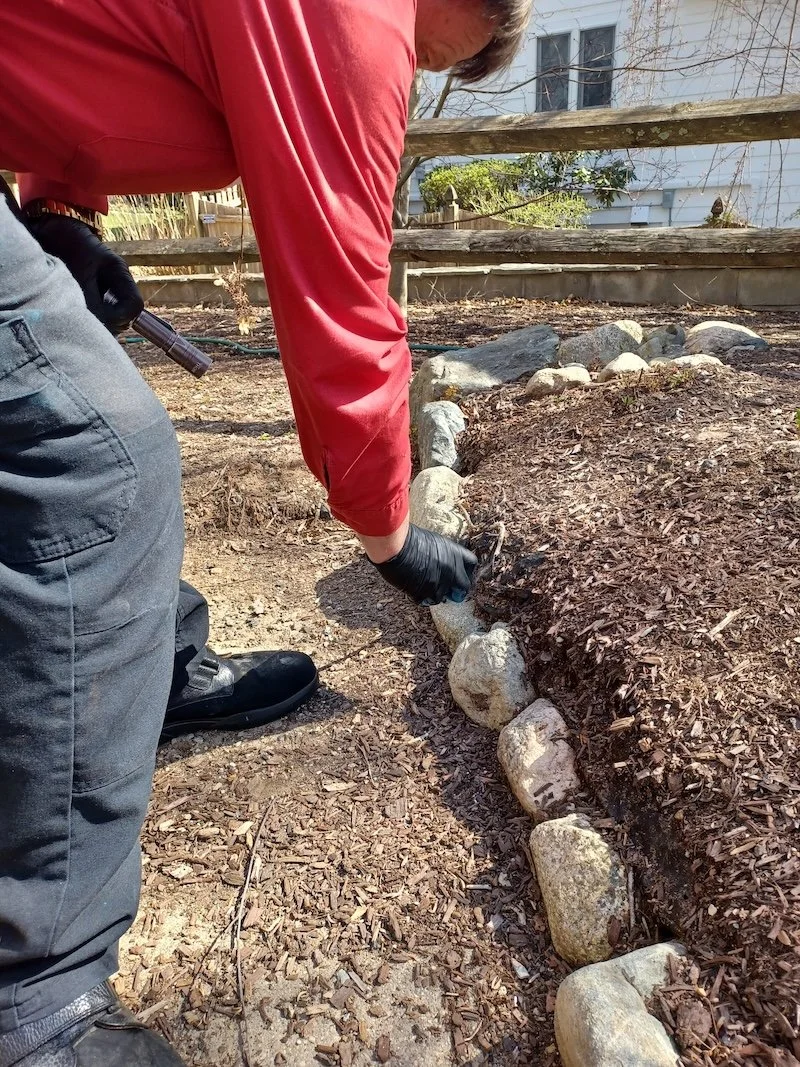
Pest control sits well with your lawn care provider when the same technicians are qualified to handle both. It is still a separate decision, and plenty of households make it separately. What makes it worth raising here is that our Massachusetts licensed technicians are certified to care for turf, trees and insects rather than one of the three, so the division is a matter of programs rather than of crews.
Running both under one provider keeps the lawn, the plantings and the pest barrier coordinated on one schedule. The practical gain is that nobody has to referee two companies treating the same ground in the same month.
PestPRO pest control is tiered the way the lawn programs are. Home Defense runs four applications around the structure, Yard Defense runs six every four to six weeks across the property, and Home or Business Protect runs quarterly for season-long coverage, with free service calls between scheduled applications on every tier.
The organic thread runs through this side too. Yard Defense Organic uses 100% natural cedar oil on a tighter cycle of ten applications every two to three weeks, with no effect on bees or other pollinators, which is the same reasoning that produced the Eco-Friendly lawn tier. A household that chose Eco-Friendly for the grass generally wants the equivalent standard applied to the rest of the yard.
What Motivates the Technician Treating Your Lawn?
Customer satisfaction and retention motivate our technicians, not monetary goals. That carries more weight than a program description suggests, because a lawn season is a sequence of judgment calls made by one person walking a property six times a year. That person decides if a weed problem wants blanket treatment, and reads a thin area as shade, compaction or insects. The product is largely that judgment.
In practice, the person at your door has nothing to gain from recommending an addition you do not need. The measure of their year is that you are still a customer at the end of it.
One credential covers the whole property. Turf, trees and insects sit under the same license, so a technician treating the lawn identifies a problem on a shrub or an entry point at the foundation and reports it rather than leaving it as somebody else’s category. Over a six-visit season that adds up to six walks of the property by someone qualified to read all of it.
Rutland Turf Care is the lawn and pest care division of Rutland Nurseries. That history is the reason the service calendar is treated as a commitment rather than as an intention.
Choose Next Season’s Lawn Care Services in Rutland, MA Before Spring
The winterizer closes this year within the next few weeks, and the route for next spring is built over the winter that follows. Our team will walk your property, read what the season left behind, and tell you plainly which fits: single treatments, a six-visit program, or a program with a pest barrier beside it.
Rutland Turf Care provides lawn care services across Rutland, MA, Marlborough and the surrounding MetroWest and Worcester communities, and an autumn walkthrough is where next season’s lawn actually gets decided.
Book your lawn care walkthrough with Rutland Turf Care and we will put your property on next spring’s route.
In Summary
Can a lawn move from the Traditional tier to the Eco-Friendly one between seasons?
A lawn moves between TurfPRO tiers from one season to the next, and some properties are served well by taking them in that order. A lawn carrying established crabgrass or broadleaf pressure clears faster under Traditional, and once the stand is clean the household moves to Hybrid or Eco-Friendly to hold it. The visit structure is the same six stops either way, so the change sits in the products applied rather than in the schedule or the route.
Does the Eco-Friendly tier mean fewer visits than the Traditional one?
The Eco-Friendly tier runs the same six visits as the Traditional one, and all three TurfPRO programs finish with the winterizer in late autumn. What differs is the work performed within those visits, because the Traditional and Hybrid tiers include weed and crabgrass controls that the Eco-Friendly program replaces with organic fertilization, biostimulants and soil inoculants.
If pest control and lawn care run together, does one technician handle both?
One technician is qualified to handle both, because Rutland Turf Care’s Massachusetts licensed technicians are certified to care for turf, trees and insects. The person treating the lawn looks at a shrub problem or an entry point at the foundation on the same visit. The two programs are still scheduled separately, because a four, six or ten application pest cycle does not line up with a six-visit lawn season, but they are coordinated under one provider.
Related: The Complete Guide to Pest Control in Rutland, MA: Protecting Your Lawn, Home, and Outdoor Space.